
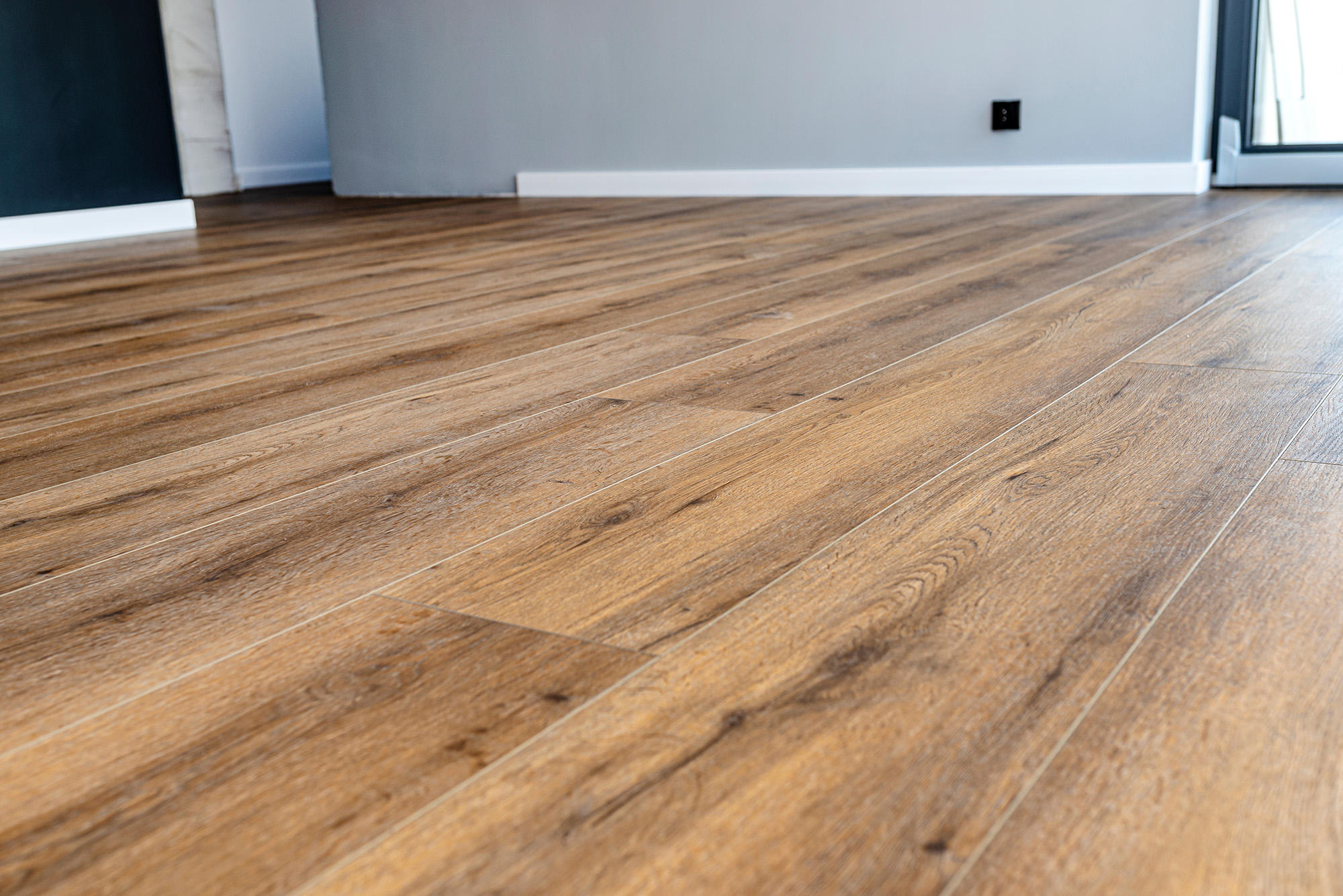
Laminate flooring has come a long way since its introduction decades ago. Gone are the days of hollow-sounding, plastic-looking floors that warped at the mere sight of a spilled glass of water. Today’s laminate offers realistic wood grains, deep textures, and incredible durability. However, as you browse your options, you will likely encounter two main categories: standard (or water-resistant) laminate and 100% waterproof laminate. Understanding the structural differences between these two choices is essential to selecting a floor that fits both your budget and your lifestyle.
Understanding the Anatomy of Modern Laminate
To understand how these floors handle moisture, it helps to know how they are constructed. Standard laminate is a layered product featuring a rigid High-Density Fiberboard (HDF) core made from recycled wood fibers. On top of this core sits a high-resolution photographic layer that mimics wood or stone, capped by a clear, hard-wearing aluminum oxide topcoat. While the top wear layer is entirely impervious to water, the underlying HDF core is still made of wood, meaning it can absorb moisture if liquid seeps through the seams between the planks.
Standard vs. Waterproof: Where the Differences Lie
Standard laminate handles daily life exceptionally well. It easily resists scratches from pet claws, dents from dropped objects, and occasional minor splashes, provided they are wiped up quickly. However, if water sits on the seams for an extended period, the HDF core can swell, causing the edges of the planks to peak or cup.
Waterproof laminate tackles this vulnerability through two innovative methods. Some manufacturers apply a specialized hydrophobic coating to the interlocking click joints, preventing water from penetrating the seams for up to 24 to 72 hours. Other premium waterproof laminates completely replace the traditional wood-fiber core with a fully synthetic, water-impermeable composite material. This allows the flooring to withstand standing water, wet mopping, and even major plumbing mishaps without losing its structural integrity.
Matching the Floor to the Room’s Demands
Choosing between these two options comes down to evaluating the specific environment of each room. For bedrooms, home offices, and formal living areas, standard laminate provides excellent performance, comfort, and cost savings. On the other hand, spaces prone to high moisture—such as kitchens, mudrooms, busy entryways, and basements—benefit significantly from the added security of waterproof laminate. It offers the high-end appearance of premium hardwood without the constant worry of moisture damage.
Ready to see how these beautiful, resilient options will look in your own space?
We invite you to contact our team of flooring specialists today to find the perfect balance of style and protection for your upcoming home renovation.


