

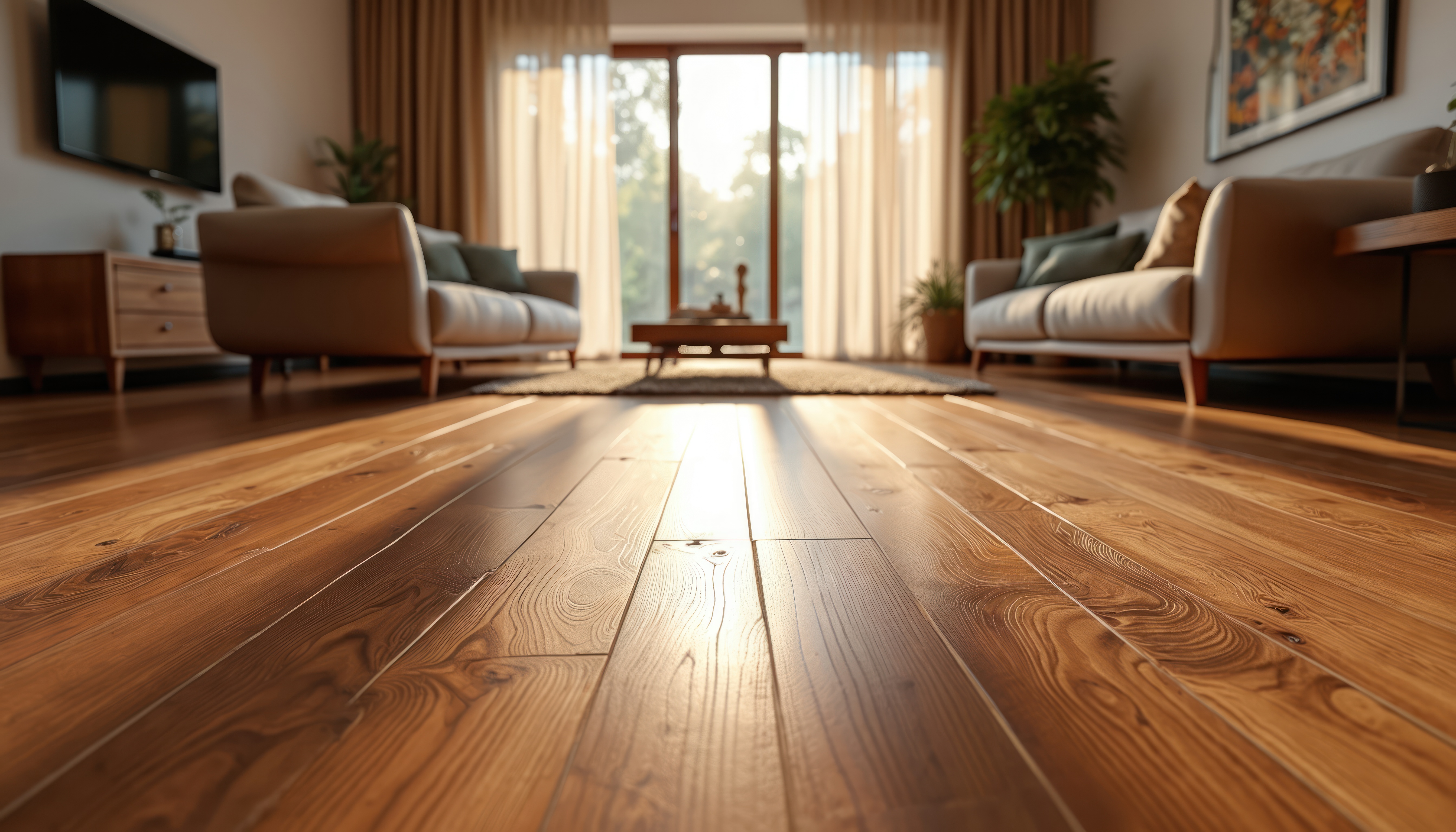
Few home features carry the enduring appeal, warmth, and prestige of genuine hardwood flooring. It is an investment that consistently adds value to a property while providing a classic backdrop for any interior design style. When investing in real wood, you face a foundational choice: solid hardwood or engineered hardwood. While both options feature beautiful, authentic wood surfaces, their internal structures dictate how they perform under different environmental conditions.
The Classic Appeal of Solid Hardwood
Solid hardwood flooring is exactly what the name implies—each plank is cut from a single, solid piece of timber, typically measuring about 3/4-inch thick. Because it is solid wood from top to bottom, this flooring can be sanded down and refinished multiple times over its lifespan. A well-maintained solid hardwood floor can easily last for a century, allowing homeowners to change stain colors and finishes as design trends evolve over generations.
However, because solid wood retains its natural cellular structure, it behaves like a living material. It expands when humidity is high and contracts when the air is dry. This natural movement means solid hardwood is prone to gapping, cupping, or warping if installed in environments with shifting moisture levels, such as basements or damp climates.
The Engineered Innovation: Built for Stability
Engineered hardwood was specifically designed to overcome the structural limitations of solid wood. An engineered plank consists of a real hardwood veneer—called the wear layer—bonded on top of multiple cross-grained layers of high-quality plywood or composite core material.
By running the grain of each underlying layer in alternating directions, the natural expansion and contraction of the wood is minimized. This cross-ply construction makes engineered hardwood incredibly stable. It can safely withstand fluctuations in temperature and humidity without warping, making it the ideal choice for concrete slabs, radiant heating systems, and below-grade basements where solid hardwood would fail.
Factors to Consider: Moisture, Subfloors, and Longevity
When deciding between the two, consider your subfloor type and your long-term goals for the property. If your home has a traditional plywood subfloor and you want a floor that can be refinished multiple times over the next fifty years, solid hardwood is an extraordinary option. However, if you are installing over concrete, want wider planks (which move more dramatically in solid wood), or live in an area with high seasonal humidity, engineered hardwood provides the exact same visual beauty with vastly superior structural reliability.
Choosing the right wood floor requires balancing timeless aesthetics with the technical realities of your home's layout.
Explore our extensive online catalog or reach out to our design consultants today to discuss your project goals, request samples, and select the ideal hardwood flooring that will elevate your home for decades to come.