
Life in a busy family home is hard on floors. Between kids, pets, muddy shoes, spilled drinks, and the daily chaos that comes with a full household, flooring takes a beating every single day. For families in Christiana and across Rutherford County, luxury vinyl plank flooring has become one of the most popular choices we see at City Tile and Floor Covering Company, and it is not hard to understand why.
LVP offers the look of hardwood, the toughness of tile, and a price point that makes whole-home installs realistic for most families. In this post, we break down what LVP is, why it performs so well in active homes, and what to consider before you buy.
What Is LVP Flooring?
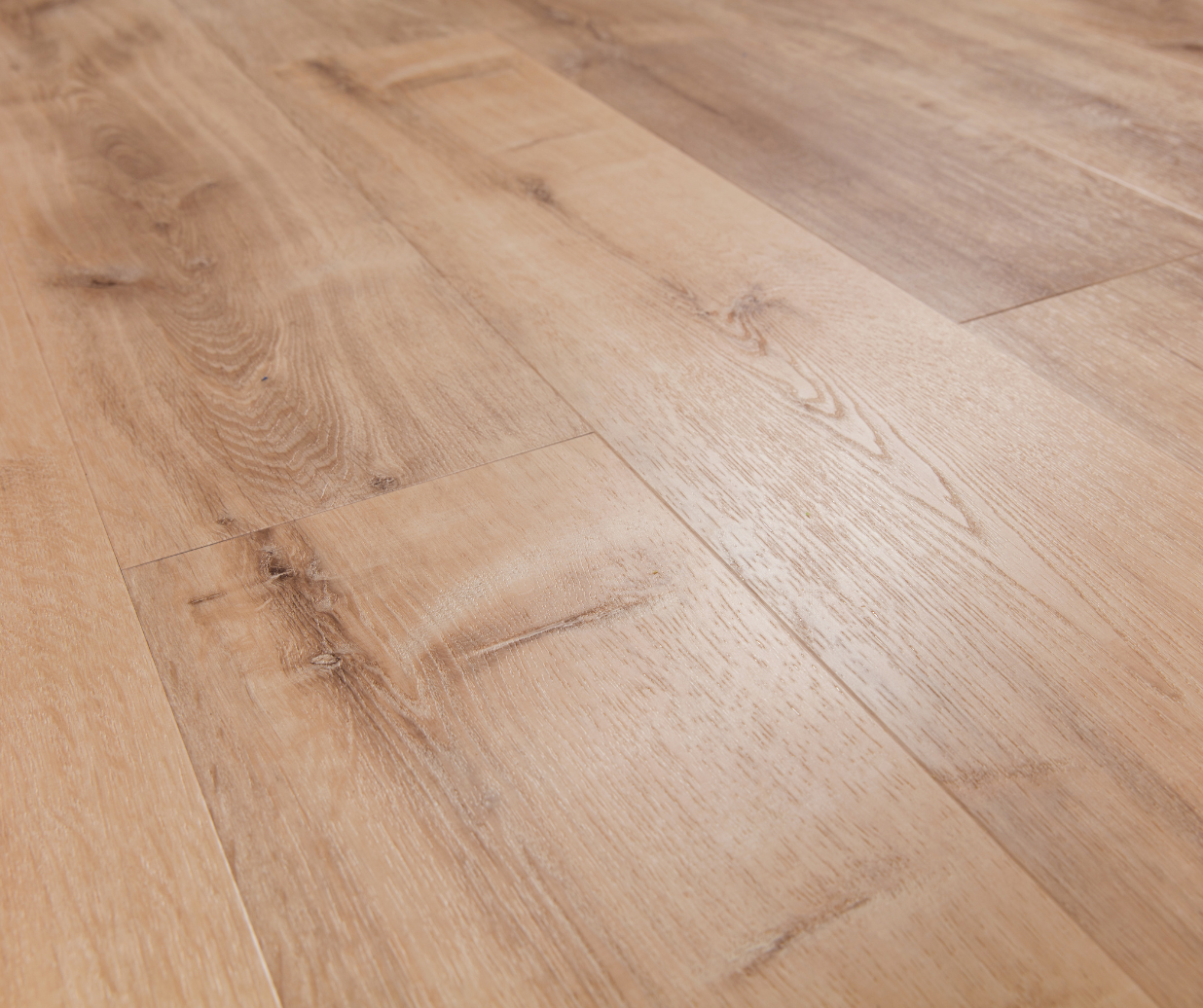
Luxury vinyl plank is a multi-layer synthetic flooring product designed to mimic the look of hardwood while offering far greater durability and moisture resistance. Each plank is made up of several layers, including a rigid or semi-rigid core, a photographic design layer that replicates the look of wood grain, and a protective wear layer on top that resists scratches, scuffs, and stains.
Modern LVP has come a long way in terms of realism. Today's products feature many textures, varied plank lengths, and detailed grain patterns that are difficult to distinguish from real wood at a glance. For families who want the warmth and style of hardwood without the maintenance headaches, LVP is often the answer.
Why LVP Works So Well in Busy Family Homes
Most flooring materials ask you to make a tradeoff. Hardwood looks beautiful but requires careful maintenance and does not tolerate moisture well. Tile is tough and waterproof, but hard underfoot and cold in the mornings. Carpet is soft and warm but holds onto stains, allergens, and pet odors.
LVP sidesteps most of those tradeoffs. Here is why active families in Christiana keep choosing it:
It is waterproof.
Unlike hardwood, which warps and swells when exposed to moisture, LVP stands up to spills, pet accidents, and wet feet without any damage. This makes it a practical choice for kitchens, bathrooms, laundry rooms, and any other space where water is part of daily life.
It holds up against scratches and scuffs.
The wear layer on quality LVP is designed to resist the kind of surface damage that comes with kids, dogs, and everyday activity. It is not indestructible, but it handles normal family life far better than most hardwood options at a comparable price point.
It is comfortable underfoot.
LVP has a slight give to it compared to tile, which makes a noticeable difference in rooms where you spend a lot of time standing, like kitchens. It also does not get as cold in the mornings, which families with young children tend to appreciate.
It works in virtually every room.
Because LVP is waterproof, it can go places hardwood cannot. A single flooring product throughout the whole home creates a cohesive look and simplifies the renovation process significantly.
It is more affordable than hardwood.
For families looking to update multiple rooms or an entire home, LVP makes the budget math work. You get a high-end look without the high-end price tag.
Room by Room: Where LVP Performs Best
Living Rooms and Bedrooms
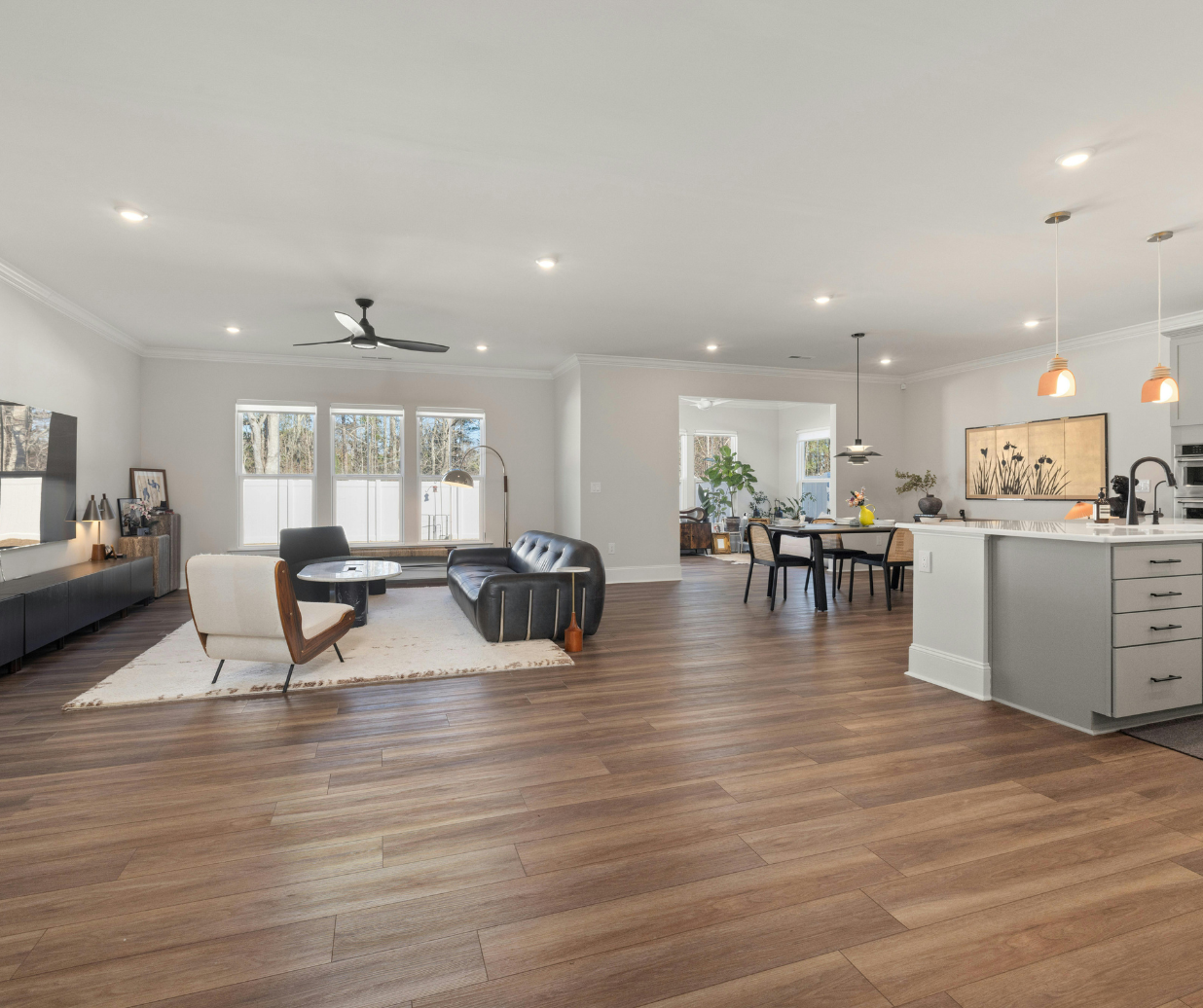
LVP is an excellent choice for living areas and bedrooms where comfort, style, and durability all matter. Wide plank styles and warm wood tones work well in these spaces and pair easily with a variety of furniture and decor.
Kitchens
The kitchen is one of the toughest environments for flooring. Between cooking spills, dropped dishes, and high foot traffic, you need something that cleans up easily and does not show every mark. LVP handles all of that well. Whether you choose LVP or tile for your kitchen is often a matter of personal preference. We are happy to walk you through both options in our showroom.
Bathrooms
LVP works in bathrooms, but there are a few installation details to get right, particularly around toilet bases and tub surrounds where moisture tends to collect. Tile remains a strong option for full bathrooms as well. Our team can help you weigh the two based on your specific bathroom layout and lifestyle.
Whole-Home Installs
One of the biggest advantages of LVP is the ability to run a single product throughout the entire home, including wet areas. This creates a seamless, connected look from room to room and is something that is difficult to achieve with hardwood or tile alone.
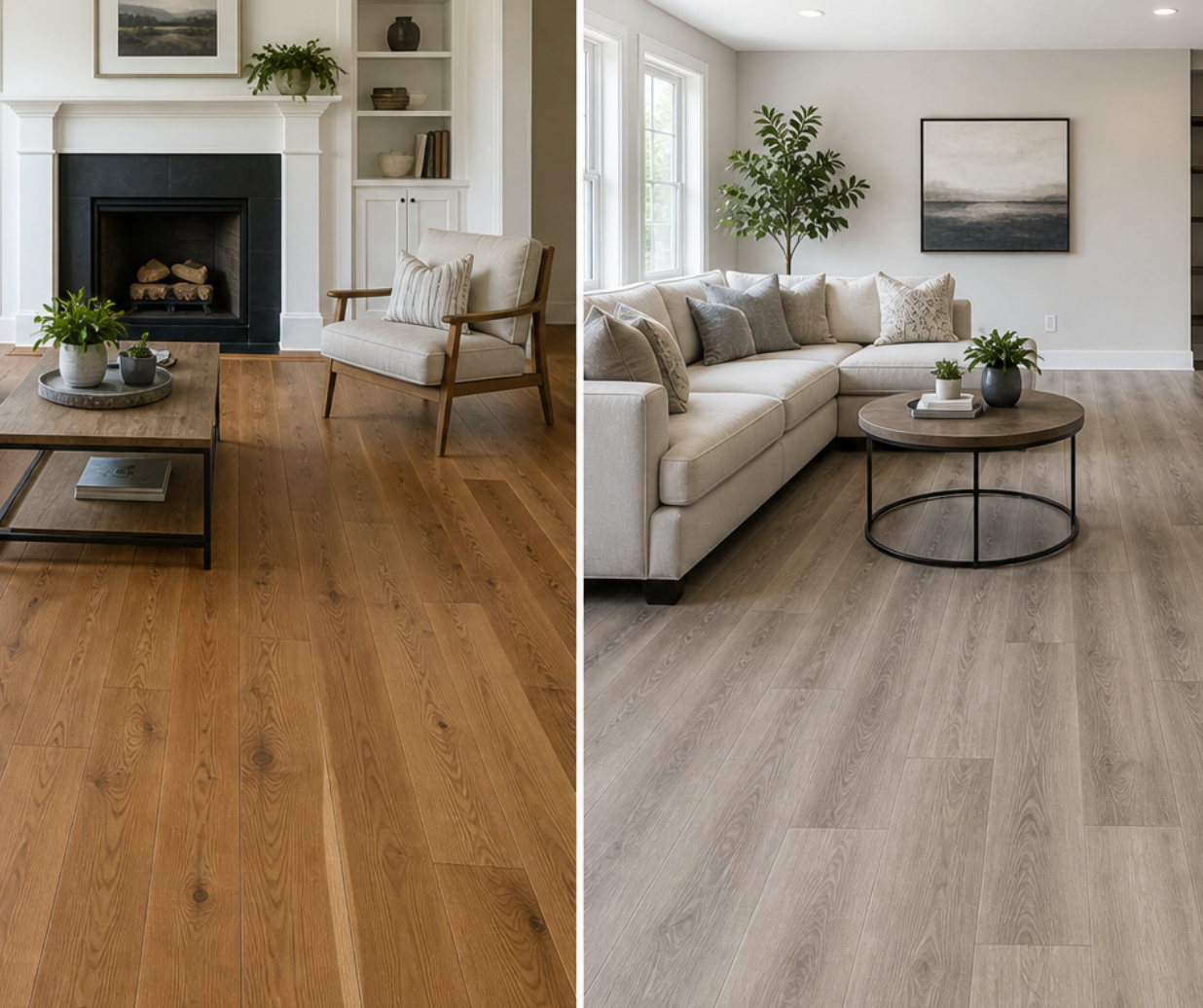
LVP vs. Hardwood vs. Tile: A Quick Comparison
Here is how LVP stacks up against the two most common alternatives for family homes:
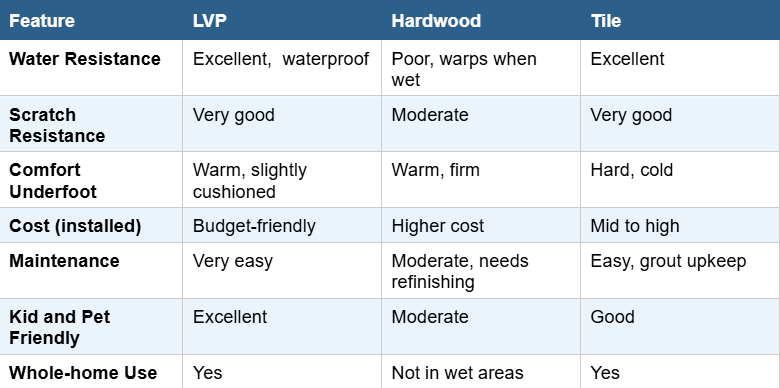
The right choice depends on your rooms, your lifestyle, and your budget. Our team can help you think through the options in person.
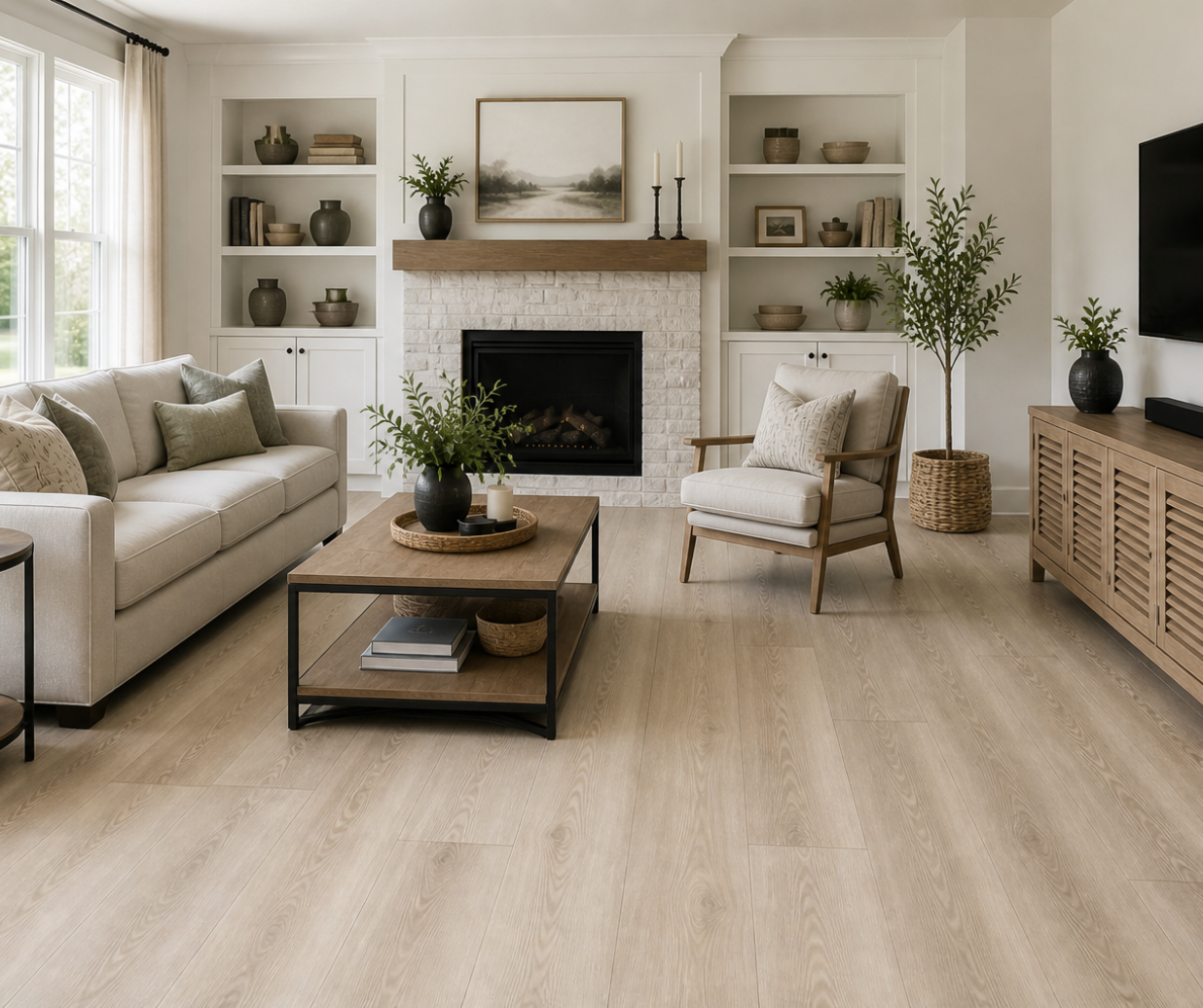
LVP Style Trends We Are Seeing in Rutherford County Homes
Design preferences for LVP in our area are shifting toward styles that feel natural, warm, and timeless rather than trendy. A few of the most popular directions we are seeing right now:
Wide plank formats (5 inches and up) for a more open, modern feel
Light to medium natural wood tones that work across a variety of interior styles
Low-sheen matte finishes that hide everyday dust and scuffs better than glossy options
Longer plank lengths that reduce the number of end joints and create a cleaner look
These styles tend to age well and appeal to a wide range of buyers, which is worth keeping in mind if resale value is a factor in your decision.
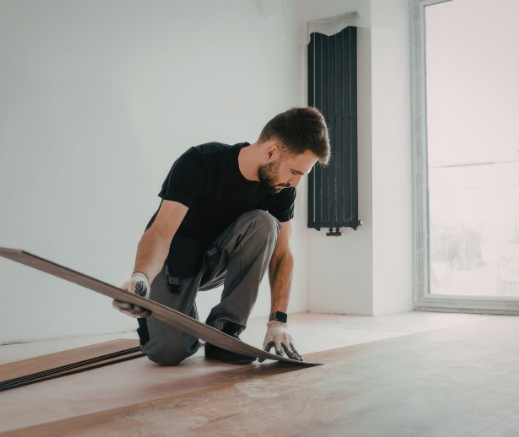
What Families Should Know About LVP Installation
LVP is generally faster and easier to install than hardwood or tile, which helps keep labor costs down. Most products use a click-lock floating system, meaning the planks lock together without glue or nails and rest on top of the subfloor rather than being fastened directly to it.
That said, installation quality still matters. A few things our team pays close attention to on every LVP job:
Subfloor flatness: LVP requires a flat, smooth subfloor. Any dips or high spots will telegraph through the planks over time and affect how the floor feels underfoot.
Acclimation: LVP should be allowed to acclimate to the room temperature before installation, especially during Tennessee summers and winters when humidity levels shift significantly.
Expansion gaps: Like all flooring, LVP expands and contracts with temperature. Leaving the right gap around walls and fixed objects prevents buckling over time.
Transition strips: Where LVP meets a different flooring type or a doorway, proper transitions protect the edges of the planks and give the installation a finished look.
Getting these details right is what separates a floor that looks great on day one from a floor that still looks great ten years later.
Frequently Asked Questions
Is LVP flooring good for homes with dogs?
Yes. LVP is one of the best flooring options for homes with dogs. The wear layer resists scratches from nails, the surface cleans up easily after accidents, and it does not absorb odors the way carpet does. For larger or more active dogs, look for products with a thicker wear layer for added durability.
Can LVP be installed over existing flooring?
In many cases, yes. LVP can often be installed over existing hard flooring surfaces as long as the subfloor is flat and the height difference at doorways and transitions can be managed. Our installers assess the existing floor during the planning process and let you know if removal is necessary.
How long does LVP flooring last?
Quality LVP installed correctly and maintained properly can last 15 to 25 years or more in a family home. The thickness of the wear layer is the biggest factor in long-term durability. We carry products across a range of wear layer thicknesses and can help you match the right product to the demands of each room.
Is LVP a good choice for a rental property in Rutherford County?
LVP is one of our most common recommendations for rental properties. It is affordable, durable, easy to clean between tenants, and looks significantly better than traditional vinyl or low-cost carpet. Individual planks can also be replaced if one section is damaged, which helps control maintenance costs over time.
What is the difference between LVP and laminate?
The key difference is water resistance. LVP is 100% waterproof and can be used in kitchens, bathrooms, and other wet areas. Laminate has a wood-fiber core that is vulnerable to moisture damage if water sits on it or gets underneath it. For most busy family homes, LVP is the more practical choice.
Does City Tile carry LVP for the whole home?
Yes. We carry a range of LVP products suited for every room in the home, from main living areas to kitchens and bathrooms. Our showroom team can help you find options that work across your whole home so you get a consistent look from room to room.
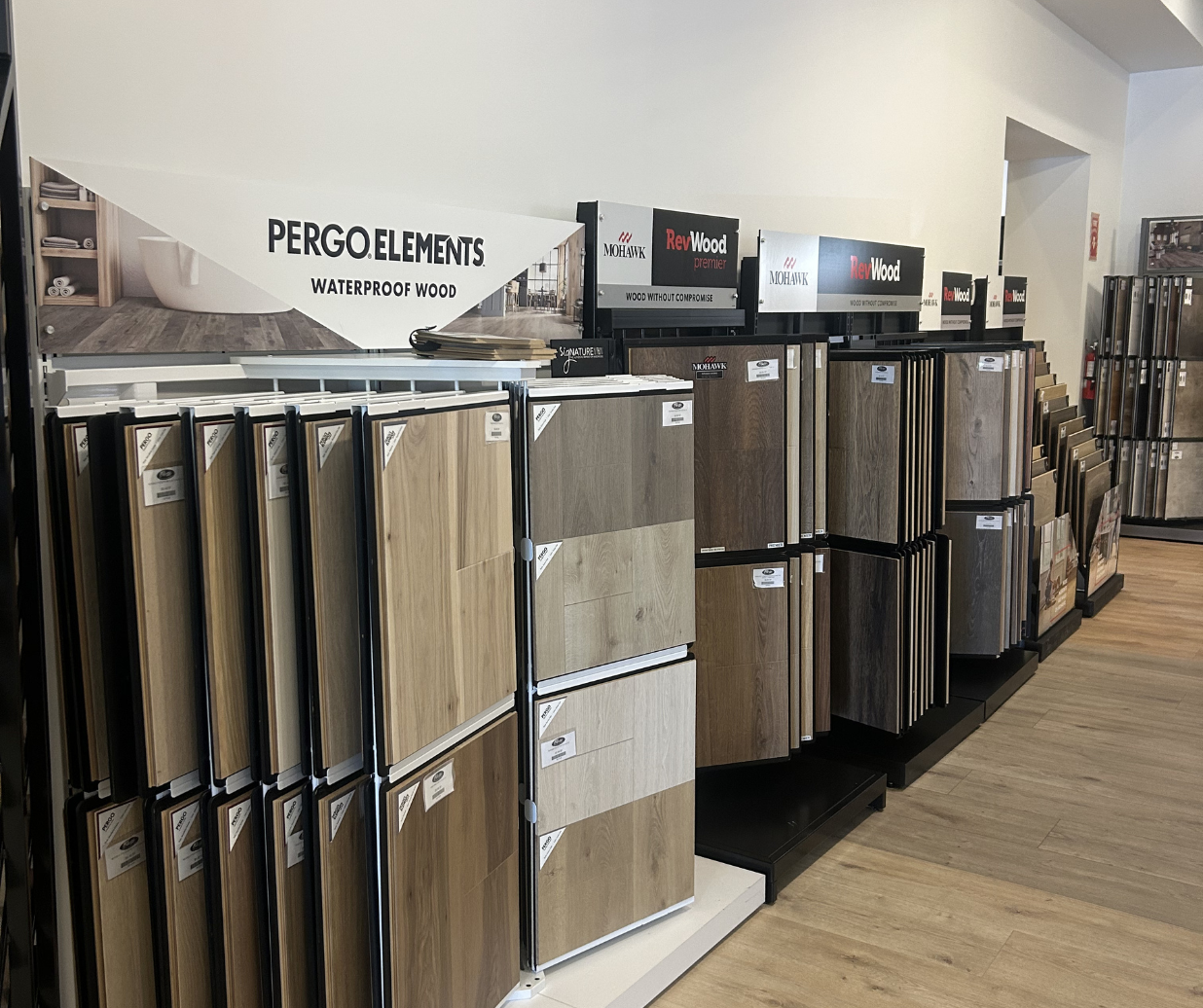
Ready to Explore LVP for Your Christiana Home?
At City Tile and Floor Covering Company, we work with busy families across Christiana, Smyrna, La Vergne, and all of Rutherford County to find flooring that holds up to real life. LVP is one of our most popular recommendations for active households, and we carry a wide selection of styles, thicknesses, and finishes to suit any home and budget.
Stop by our showroom to see LVP samples in person and talk through your project with our team. We handle everything from product selection through professional installation, so you can get the floor you want without the stress of managing it yourself.


